Insured Transport
Insured under federal cargo liability requirements. Coverage is part of the quote, not an add-on.

Texas shipments typically run $850 to $1,850 for open transport and take 3 to 6 days, depending on origin and destination.


Shipping a car to or from Texas typically takes 3 to 6 days and costs $850 to $1,850 for open transport.
Reference pricing for common Texas corridors. Your specific quote depends on origin city, destination city, vehicle type, and season.
Updated October 2026| Corridor | Distance | Transit | Typical |
|---|---|---|---|
| Texas to Illinois | 900 to 1,100 mi | 3 to 5 days | $850 to $1,200 |
| Texas to Arizona | 1,150 to 1,200 mi | 3 to 5 days | $850 to $1,150 |
| Texas to California | 1,450 to 1,950 mi | 3 to 6 days | $1,000 to $1,850 |
| Texas to New York | 1,450 to 1,650 mi | 3 to 6 days | $1,100 to $1,750 |
| Texas to Massachusetts | 1,750 to 1,850 mi | 4 to 6 days | $1,100 to $1,650 |
Quotes well below the typical range are almost always bait-and-switch. You are quoted a low price to pay the deposit, and then the price is bumped at the last minute.
Insured under federal cargo liability requirements. Coverage is part of the quote, not an add-on.
Your quote is locked for 28 days. Cancel free up to 7 days before pickup.
Most shipments run door to door. If access is tight (narrow streets, low clearance), we will arrange a nearby meeting point.
One percent of every booking funds Clean Air Task Force, a nonprofit working on transport and energy emissions.
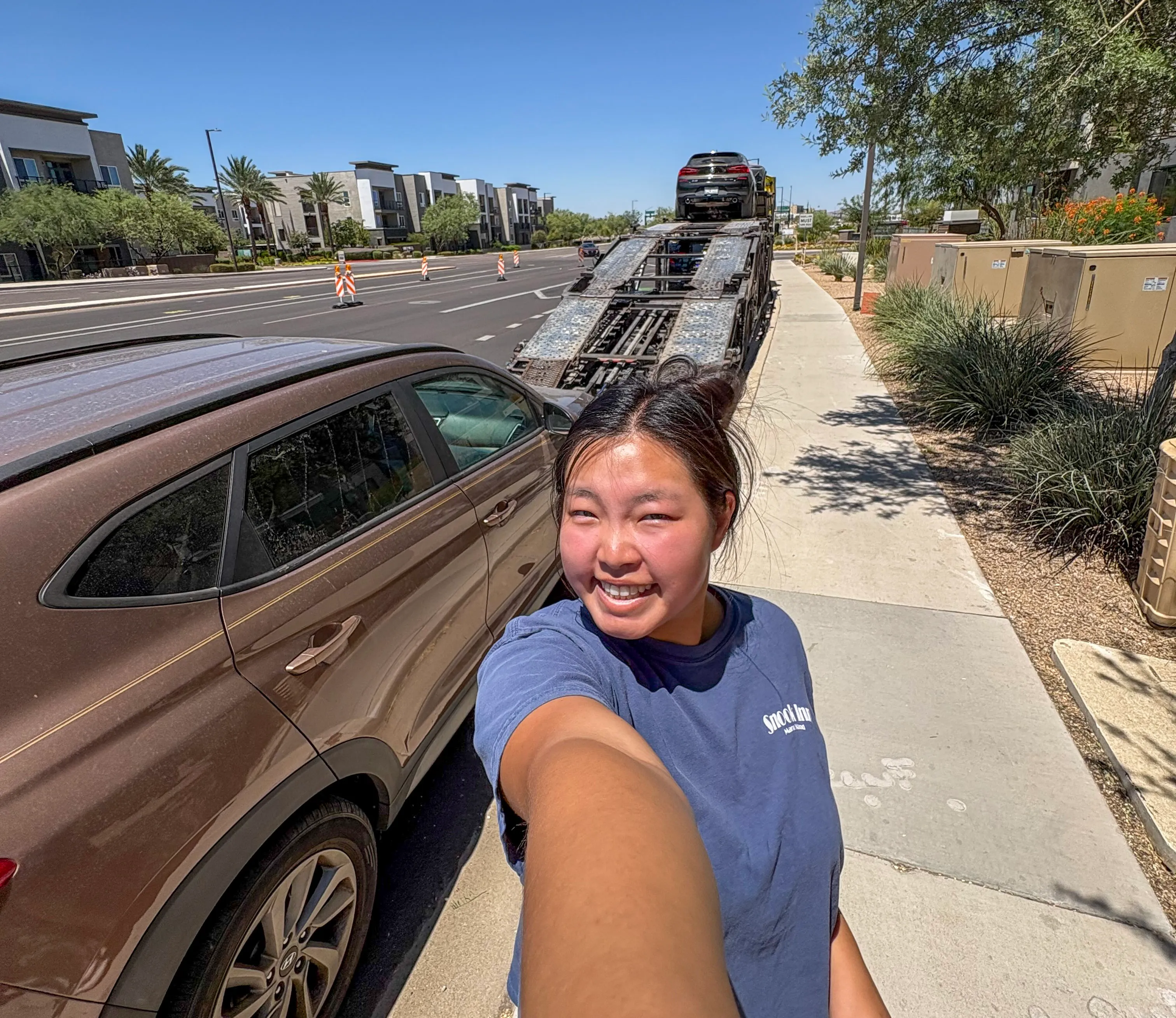
It is a really professional company, and the service was great, and we also really value the environmental contributions they are doing. Thank you guys!! Will move my car again with you ❤️
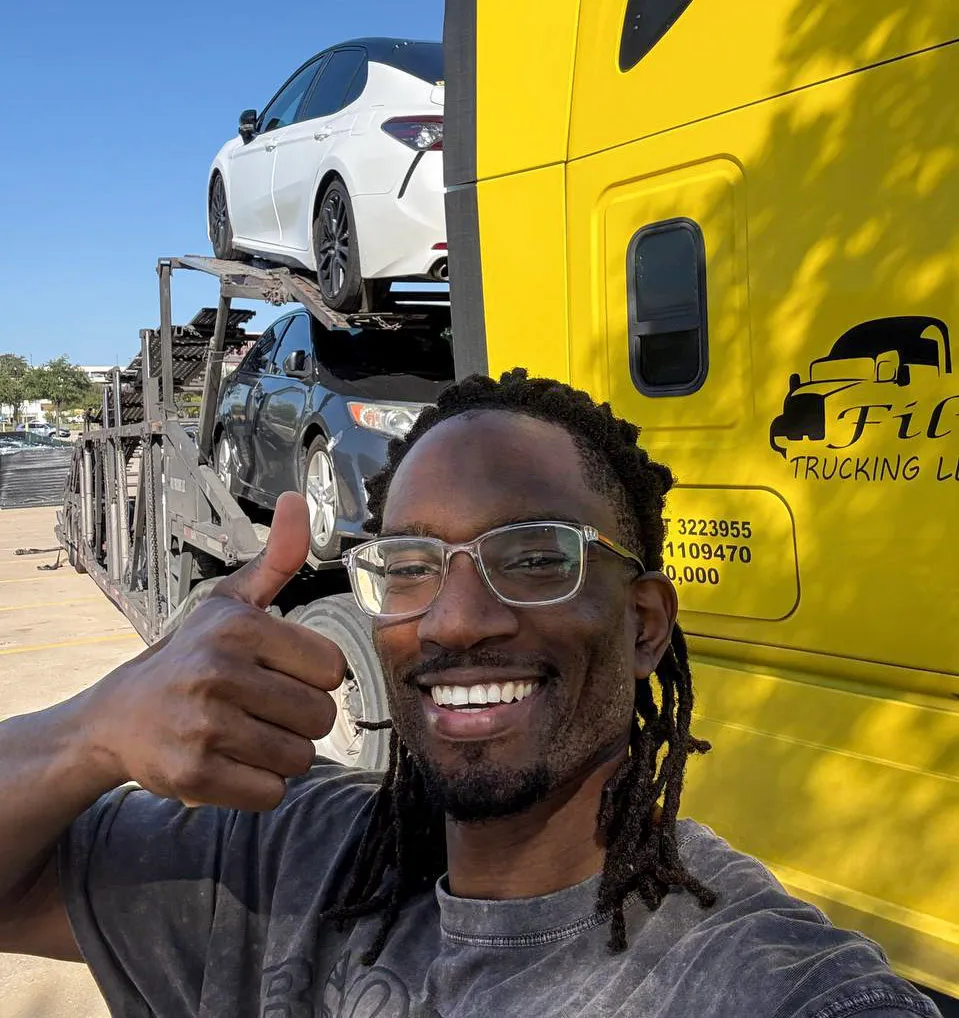
I'm really happy with the service!!! Fili is a really nice person and a professional.

Really nice company, the whole process was fast and easy peasy.
.O1a0LCh8_1TgCAp.webp)
.BCBIJAen_ZbL0rP.webp)
.DToGaxuS_2h6UD8.webp)
.DV7dI2sG_KTQPG.webp)
.DLyL1g5U_ZCia4H.webp)
.CJ786qTl_ZfH9VB.webp)
.DYsVKq0W_ZHOnca.webp)
.D96_jjeg_ZofPe0.webp)
.ComJTPxM_9zjeq.webp)
Locked for 28 days. Nothing charged at booking.
Texas is big enough to have two kinds of weather that matter for a shipment, at opposite corners of the state and at opposite ends of the year. Between them is a lot of ground. El Paso to Houston alone is about 750 miles without crossing a state line, and across most of it the roads give a shipment little to plan around, so it’s the Gulf coast between June and November and the Panhandle in midwinter that are worth keeping in mind if your car starts or ends near one of them.
On the coast it can, from Houston and Galveston down to Corpus Christi, the stretch where Ike came ashore in 2008 and Harvey in 2017. The season runs from June 1 to November 30. While a storm passes, trucks stay off the coastal roads, and car deliveries around a landfall are usually back to normal within a week, which is why we’d give a coastal pickup or delivery in those months a few days of slack.
I-40 crosses the top of the state through Amarillo, on open plains where a blizzard can bring visibility down to almost nothing. When that happens TxDOT shuts the interstate, sometimes from Amarillo all the way to the New Mexico line, and it has done so in three winters since 2015. Nothing gets through until it reopens, which has taken anywhere from an afternoon to about two days, so an Amarillo pickup or a car crossing the Panhandle in December or January can run a day or two behind its window.
Reviewed by Andrey Zhe, Sequoia founder.
If the move makes you a Texas resident, these are the state's rules for the car.
Checked September 2026 against Texas DMV, Texas DPS, TCEQ, Texas Comptroller. Rules change; the state's own site has the final word.
One percent of every booking goes to Clean Air Task Force, a nonprofit working on policy and technology to clean up transport and energy emissions.

Our giving is independently verified each year.
Shipping a car to or from Texas typically runs $850 to $1,850 for open transport, depending on the corridor and vehicle. Midwest lanes to Illinois run $850 to $1,200. Longer corridors to the Northeast or California run $1,000 to $1,850. Enclosed transport costs about 40 to 70% more, rising with distance. Your quote is locked for 28 days from the moment you book.
Most Texas shipments take an estimated 3 to 6 days. Lanes to Illinois run 3 to 5 days, and the longer corridors to California, New York or Massachusetts take 3 to 6. The dates most likely to move are on the Gulf coast in hurricane season and in the Panhandle during a winter blizzard, where a closed road can hold a pickup or delivery for a day or more.
Yes, if you're becoming a Texas resident, within 30 days of moving. In the counties around Houston, Dallas and Fort Worth, Austin and El Paso, and in Bexar County (San Antonio) from November 1, 2026, most gasoline cars have to pass an emissions test before they can be registered, so the car needs to be in Texas early in that window. An electric car skips the test but pays a $200 fee at its first Texas registration and every year after, and a new resident pays a $90 new resident tax instead of sales tax on a car they already own.
The truck waits until the road is safe to drive, and your pickup or delivery date moves with it. We'll confirm the driver's new window with you as soon as the road reopens. Snow on the mountain passes and in the northern states, and hurricanes along the Gulf and Atlantic coasts, are the usual causes.
Wash the car so its condition is easy to record, photograph it from each corner, and leave about a quarter tank of fuel. Take out anything above the 100 pound personal item allowance, and take your toll transponder such as FasTrak, E-ZPass or SunPass off the windshield, because toll gantries can read it while the car rides the truck. Have a working key ready for the driver.
One to two weeks ahead is enough on most routes. Busy corridors handle shorter notice, and quieter lanes benefit from the full two weeks. Booking earlier does not lower the price; it settles your dates sooner, and the quote is locked for 28 days either way.
Nothing is charged at booking. The deposit is charged 7 days before your pickup window opens, and the remaining balance is paid to the driver at delivery.
Every shipment is insured by the carrier under federal cargo liability requirements.
Locked for 28 days. Nothing charged at booking.